

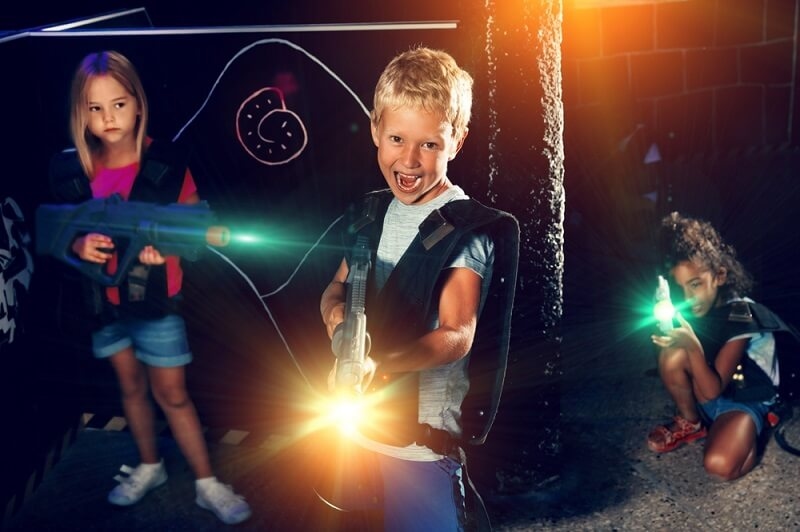
Some days, kids have energy like a tiny tornado. Outside is raining. Or too hot. Or it is bedtime-adjacent and everyone’s a little feral. That is when tag becomes the lifesaver game, because it is fast, flexible, and weirdly effective at burning energy without needing any fancy stuff.
The trick is making tag work indoors without turning the living room into a wrestling ring. With the right setup and a few smart tweaks, tag becomes a safe, giggly, repeatable game that kids actually love. And adults can survive it. Win-win.
This guide walks through fun tag variations, how to set them up, and what to do when the space is tiny. Like, “two steps and you hit a wall” tiny.
Before anyone starts sprinting, set the room up like a smart person.
Here is a quick safety checklist:
One more thing. If kids are competitive, remind them that tag is not a chase scene from an action movie. It is more like a comedy. A silly one.
Tag is simple. Everybody knows the idea. One person chases, other people run, someone gets tagged, roles switch. Done.
Indoors, the magic is that tag can be adapted to fit:
It also teaches a bunch of useful skills without anyone noticing: spatial awareness, listening, self-control, quick decision-making. And teamwork, if a variation includes “saving” or “freeing” players.
Now let’s get to the fun part. The variations.
These are the “start here” games. Easy rules, fast learning curve.
One tagger. If someone gets tagged, they freeze like a statue. To get unfrozen, another player has to tap their hand or shoulder.
Make it harder by adding:
This version is great for groups because it keeps everyone involved. Also, the statues are hilarious.
Instead of tagging someone’s body, the tagger has to step on their shadow. Indoors, this works best with bright lights, a lamp, or a sunny window.
It is calmer than regular tag, but still exciting. Kids start zig-zagging like little strategists.
Pick 3 to 6 colors that exist in the room: blue pillow, brown table, white wall, green chair. When the tagger calls “Green,” everyone must touch something green before the tagger can tag them.
This works especially well in classrooms and playrooms. It adds thinking. Also, it slows kids down in a good way.
These get a little more creative. Still easy, just more “wow” factor.
Before the round starts, each player chooses an animal movement:
Everyone must move like their animal. The tagger too.
Yes, it gets chaotic. But it is the fun kind of chaos. Also, it burns energy fast.
Everyone moves in slow motion. The tagger is also slow. If someone breaks slow motion, they become the tagger. Kids hate losing, so they suddenly become masters of control.
This is a perfect “indoor tag” option when the space is tight and adults are nervous.
Each player secretly picks a “power” that can be used once per round, like:
Kids love this because it feels like a game inside the game. And it adds surprise.
Now the practical stuff, because tag can go off the rails if the rules are fuzzy.
A simple rule set that works in most homes and classrooms:
These Indoor tag game rules help kids play longer without arguments. Because nothing ruins tag faster than, “You pushed me,” followed by dramatic crying.
Don’t Miss Out: Life Skills Activities for Kids, A Simple Parent Guide
Not every home has a big open room. Some people have a hallway and a prayer. That still works.
Players can only move forward and backward. No passing. If the tagger blocks the hall, players have to retreat to a “base” at either end.
This is more strategic and less wild sprinting. Great for narrow spaces.
Pick two corners as bases. Players can rest in a base for 5 seconds, then must leave. The tagger cannot enter the base, but can guard the exit.
It becomes a mini game of timing and bravery.
Use cushions, chairs, or tape lines to create a simple “maze” path. Players can only move along the path. If they step outside, they are automatically tagged.
This is controlled movement, which adults love. Kids love it too because it feels like an obstacle course.
Small spaces need rules that reduce speed and increase creativity. Here are the best ones.
Everyone wears a sock tucked into the waistband like a tail. Instead of tagging with hands, the tagger must grab the sock tail.
This slows things down naturally. It is also ridiculously funny.
No chasing across the room. The tagger can only take three steps before stopping. They must tag someone who comes near them. Kids learn to bait the tagger and dodge at the last second.
It becomes more like a puzzle than a sprint race.
When tagged, a player becomes a statue. The only way to rejoin is if another player swaps places with them by touching them and freezing in their spot for three seconds.
This version is sneaky, cooperative, and perfect for tight areas. These Small Space Tag Games work because they create excitement without needing big movement.
Want to level it up without buying anything? Try these.
One little trick: kids stay more engaged when rounds are short. It feels like they always get another chance.
If a toddler and a ten-year-old are playing together, it can get unfair fast.
Here are balancing ideas:
Also, if someone is always the tagger, change the rule. Nobody wants that job forever. Even if they pretend they do.
Read More: 5 Learning Toys That Teach Kids About Healthy Foods
Tag indoors is fun until it is not. These fixes help.
It does not need to be perfect. Just playable.
Two is enough. With three or more, it gets more exciting because players can help, distract, or rescue each other.
Freeze tag, color tag, and turtle tag work well because they keep movement controlled and rules easy to follow for larger groups.
Clear the floor, set boundaries, require gentle hands-only tagging, and choose slow-motion or limited-step versions to reduce collisions.
This content was created by AI