

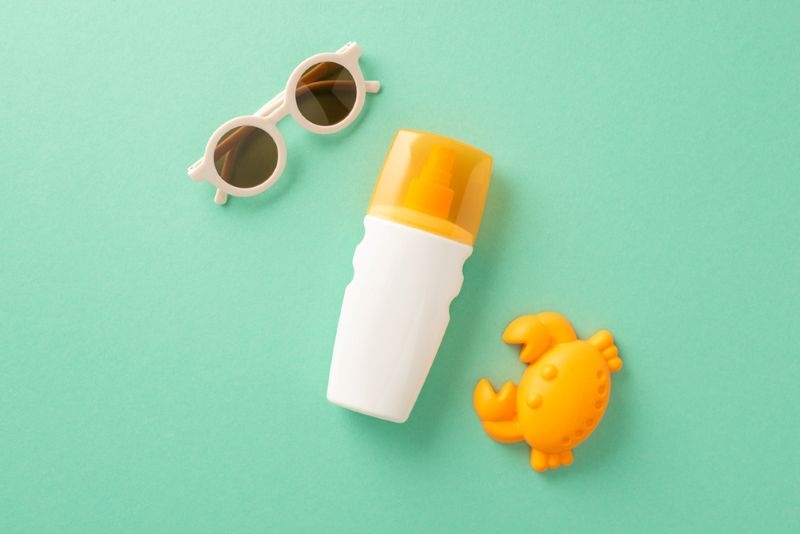
Kids and sunshine go together like snacks and car seats. The moment the weather looks nice, they want to run outside, climb something dangerous, and “just play for five minutes.” Then an hour passes. Then two. Then someone comes in looking pink and miserable.
That’s why sun safety for kids matters so much. Not in a scary way. In a practical way. Kids have sensitive skin, they don’t notice sunburn until it hurts, and they’re not exactly known for sitting still while a parent re-applies sunscreen. So the goal is simple: protect them without turning summer into a daily argument.
This guide covers the basics of sun protection for children, including what SPF to choose, how to apply sunscreen correctly, and how to build habits that actually stick.
Sun safety for kids starts with one idea: the sun doesn’t need to be “super hot” to cause damage. UV rays can be strong on cloudy days, breezy pool days, and even during quick playground trips.
The tricky part is that kids often don’t feel heat the same way adults do. They don’t notice redness building. They just keep playing. And then bedtime comes, and suddenly the shoulders are burned, the cheeks are hot, and everyone’s having a rough night.
Good sun habits help avoid all that. They also lower long-term skin damage risk. It’s one of those “small steps now, big benefit later” situations.
Kids have thinner, more sensitive skin. They also have less natural protection from melanin, especially younger children with lighter skin tones. That makes it easier for UV rays to cause irritation and burns.
Add in the fact that kids:
And sunburn becomes almost predictable.
Sun protection isn’t about being strict. It’s about being realistic.
Yes, sunscreen matters. But sunscreen alone often fails because it rubs off, washes off, or gets applied too lightly.
Strong kids sun protection includes a mix of:
Think of sunscreen as the backup plan, not the only plan.
That mindset helps parents feel less stressed when sunscreen gets missed once. Because the child still has other protection in place.
This question comes up all the time, and it’s fair. Parents see SPF 15, SPF 30, SPF 50, SPF 100, and it starts to feel like a math problem.
So, what spf is best for kids? Most pediatric experts recommend using at least SPF 30 for everyday outdoor play. SPF 50 is often chosen for extended time outside, especially near water or during peak sunlight hours.
The more important part is not chasing the highest number. It’s applying enough and reapplying on time.
Because SPF 50 applied once in the morning won’t save anyone at 3 PM. It just won’t.
When picking sunscreen for children, parents usually want three things:
Mineral sunscreens (with zinc oxide or titanium dioxide) are often recommended for sensitive skin because they sit on top of the skin and reflect UV rays. They can be a little thicker and may leave a white cast, but many newer versions blend better.
Chemical sunscreens absorb UV rays and can feel lighter on the skin, which some kids prefer. Some children may react to certain ingredients, so patch testing can help when trying a new product.
If a child has eczema or very sensitive skin, fragrance-free and pediatric-tested formulas can be a safer starting point.
Here’s the honest truth. Sunscreen is not hard. But kids make it hard.
The secret is treating it like a routine, not a negotiation.
Simple tips that help:
Some parents use a “sunscreen song.” Others do it in front of a mirror. Whatever works. No judgment. The goal is consistency, not perfection.
Also Read: 10 Causes for Childhood Obesity: Key Risks to Know
Even parents who do sunscreen well often forget to reapply. Or they remember but the kids are wet, sandy, running around, and it feels impossible.
But reapplication matters most.
A basic rule:
Even “water-resistant” sunscreen doesn’t last all day.
If a child spends a full afternoon outside, one application isn’t enough. That’s how sneaky sunburn happens.
Sunscreen fades. Clothing doesn’t.
Sun-safe clothing, rash guards, and wide-brim hats make a huge difference, especially for kids who spend hours outside. If a child wears a long-sleeve swim shirt, their shoulders are already protected. Less stress for everyone.
Shade breaks help too. Even 10 minutes under a tree or umbrella can lower sun exposure a lot. It also gives kids a moment to cool down and drink water.
And yes, sunglasses count. Kids’ eyes need protection just like their skin.
The strongest sun often hits between late morning and mid-afternoon. That doesn’t mean kids must stay inside all day. But it does mean parents can plan smarter.
If possible:
This kind of planning supports sun safety for kids without constant reminders and sunscreen battles.
Even careful parents deal with sunburn sometimes. It happens. A surprise day out. A missed reapplication. A kid who rubbed sunscreen off their nose every five minutes. Life.
If a child gets burned:
If there are blisters, fever, severe pain, or the child seems unusually tired, a pediatrician should be contacted.
You May Also Like: 5 Learning Toys That Teach Kids About Healthy Foods
Here’s the second mention, spaced out: sun safety for kids works best when families keep it basic and repeatable. Sunscreen plus shade plus clothing creates a routine that protects without stress.
And spaced out for the second keyword use: what spf is best for kids is usually answered with “SPF 30 or higher,” but the real win is proper application and reapplication. Strong kids sun protection includes hats, sunglasses, and shade breaks, not just lotion. And choosing sunscreen for children that feels comfortable on skin makes daily use easier, which matters more than any perfect brand choice.
Most families use SPF 30 or higher. SPF 50 can be helpful for long outdoor days, especially near water, as long as it’s reapplied properly.
Sunscreen should be reapplied every two hours outside, and after swimming, sweating, or towel drying. Water-resistant sunscreen still needs reapplication.
Clothing provides consistent protection and doesn’t rub off like sunscreen. The best approach combines protective clothing, shade, and sunscreen for exposed areas.
This content was created by AI