


In today's fast-paced world, teaching children to eat mindfully and intuitively is more important than ever. As parents, we play a crucial role in shaping our children's relationship with food and helping them develop healthy eating habits that will last a lifetime.
Intuitive eating is a powerful tool that can empower children to listen to their bodies, eat when they're hungry, and stop when they're full.
Research in paediatric psychology shows that children born with innate hunger and fullness cues lose up to 40% of their intuitive eating abilities by age five when external pressure, such as clean-plate rules or food rewards, is routinely introduced. By fostering a positive and intuitive approach to eating, we can help our children avoid the pitfalls of diet culture and develop a healthy relationship with food.
Intuitive Eating is a philosophy developed by dietitians Evelyn Tribole and Elyse Resch in the 1990s, aimed at helping individuals cultivate a healthy relationship with food and their bodies.
It is based on ten principles that guide individuals towards making peace with food, honouring their hunger and fullness cues, and embracing body positivity.
The principles of intuitive eating are nothing but the basic discipline of eating that one should consider rather than holding on to food. Here are 10 principles of intuitive eating:
Intuitive eating begins with rejecting the diet mentality and recognising that traditional dieting often leads to negative outcomes such as guilt, shame, and disordered eating patterns. Instead, individuals are encouraged to focus on their overall well-being rather than pursuing weight loss.
This principle emphasises the importance of listening to and respecting your body's natural hunger cues. It involves eating when you're hungry and nourishing your body with adequate and satisfying meals and snacks.
Allowing yourself unconditional permission to eat all foods without guilt or judgement is central to intuitive eating. By removing the labels of "good" and "bad" foods, individuals can develop a healthier relationship with food and eliminate the cycle of deprivation and overeating.
The Food Police represent the internalised rules and beliefs about food ingrained by diet culture. Intuitive eating encourages individuals to challenge these negative thoughts and beliefs and replace them with more positive and compassionate self-talk.
Eating should be a pleasurable and satisfying experience. This principle encourages individuals to explore and savour the sensory aspects of food, including taste, texture, and aroma, to enhance the enjoyment of eating.
Learning to recognise and honour your body's fullness cues is essential for practising intuitive eating. By tuning into physical sensations of fullness, individuals can avoid overeating and develop a more attuned relationship with their bodies.
Intuitive Eating recognises that emotions often influence eating behaviours. Instead of turning to food for comfort or distraction, individuals are encouraged to explore alternative coping mechanisms and address underlying emotional needs.
Body respect involves accepting and appreciating your body for its unique size, shape, and abilities. It entails letting go of the pursuit of an idealised body image and embracing body diversity and self-compassion.
Intuitive eating emphasises joyful and intuitive movement that focuses on how physical activity makes you feel rather than burning calories or achieving specific fitness goals. It encourages individuals to engage in activities they enjoy and that promote overall well-being.
While intuitive eating prioritises satisfaction and pleasure in eating, it also acknowledges the importance of nourishing your body with balanced and nutritious foods.
This principle encourages individuals to make food choices that boost health without rigid rules or restrictions.
Overall, intuitive eating is a holistic approach to wellness that promotes mindfulness, self-compassion, and body autonomy.
By embracing these principles, individuals can cultivate a healthier relationship with food, their bodies, and themselves, leading to greater overall well-being and satisfaction with life.
Intuitive eating for kids has numerous benefits that can positively impact their physical, emotional, and mental well-being. Here are some benefits of it:
Must read: The Role of Nutrition for an Active Lifestyle for Kids
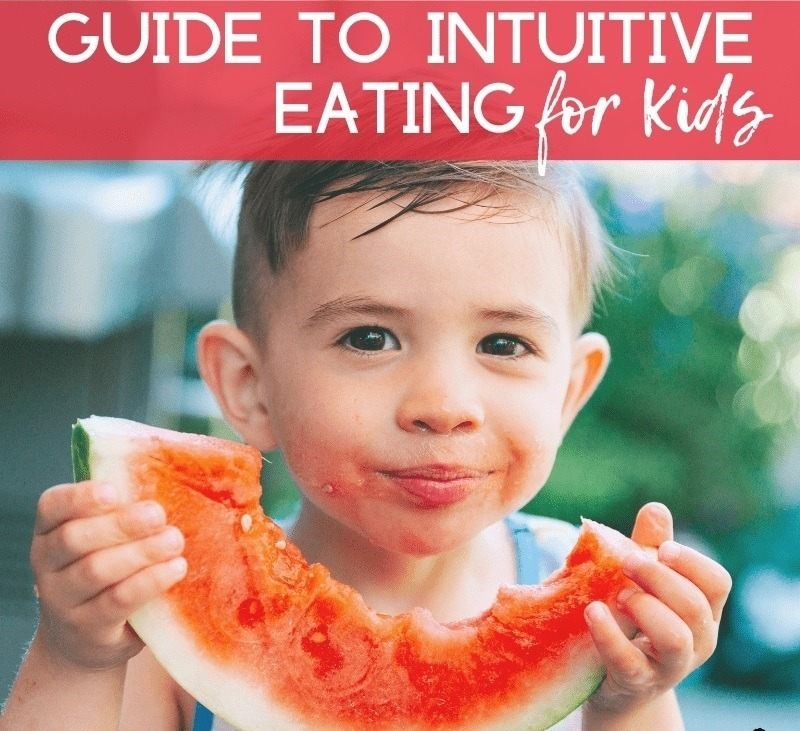
Implanting good habits in children is difficult, but with consistency and the urge to build something good, the below-mentioned tips on intuitive eating in children can be fruitful:
Children learn by watching and imitating their parents, so it's essential to model healthy eating behaviours and a positive relationship with food. Avoid labelling foods as "good" or "bad" and focus on balanced meals that include a variety of nutrients.
Help children tune into their hunger and fullness cues by allowing them to choose when and how much to eat. Avoid pressuring children to clean their plates or using food as a reward or punishment.
Make mealtime a pleasant and relaxed experience by eating together as a family, minimising distractions, and engaging in conversation. Encourage children to savour their food and listen to their bodies while eating.
Expose children to a wide range of nutritious foods, making healthy and fun recipes to help them develop a diverse palate and learn to enjoy new flavours and textures. Offer plenty of fruits, vegetables, whole grains, lean proteins, and healthy fats to support their growing bodies.
Encourage children to eat slowly, chew their food thoroughly, and pay attention to the taste, texture, and sensations of each bite. Help them cultivate a sense of mindfulness and gratitude for the nourishment their food provides.
Encourage children to appreciate their bodies for all they can do rather than focusing on appearance or weight. Help them practise self-compassion and develop a healthy sense of self-worth outside of their physical appearance.
Here they are:
For instance, individuals with medical conditions necessitating adherence to specific dietary regimens should follow the advice of their healthcare provider or licensed dietitian.
These individuals may encompass those with conditions such as diabetes, hypertension, and cardiovascular disease.
Individuals with dietary restrictions due to health concerns, such as those diagnosed with Coeliac disease, should continue to abstain from certain foods.
Some individuals, particularly those in need of weight gain or recovering from eating disorders, may not be suitable candidates for intuitive eating. In such cases, it is advisable for them to seek guidance from a registered dietitian or medical professional.
Cultivating intuitive eating for kids can have a profound impact on children's health and well-being.
By fostering a positive and intuitive approach to eating, we can empower children to make healthy food choices, listen to their bodies, and develop a balanced relationship with food. With practical tips and strategies, parents can create a supportive environment that nurtures children's innate ability to eat intuitively and joyfully.
By cultivating healthy eating habits from a young age, we can set our children up for a lifetime of positive and mindful eating behaviours.
The Division of Responsibility assigns parents the task of deciding what, when, and where food is served, while leaving the decision of whether to eat and how much to eat entirely to the child.
Avoid withholding sweet foods until dinner plates are cleaned, as serving a small portion of dessert alongside the main meal neutralises its reward status and prevents overindulgence.
Ask neutral, body-focused questions during meals like how their tummy feels or if their stomach feels comfortable, avoiding directives to clear their plate.
Children given consistent access to a wide variety of foods naturally learn to balance their intake without obsessing over previously restricted treats.
Parents can practise avoiding negative body talk around the dinner table, refraining from labelling their own meals as guilty pleasures, and eating mindfully alongside their children.
This content was created by AI