Best DIY Games for Kids Using Stuff You Already Own
It is a rainy Saturday afternoon, the kids are crawling up the walls, and you have heard "I am bored" three times already. Sound familiar? Here is the thing: you do not need to order anything online or make a store run. The best DIY games for kids are already sitting in your home, hiding inside your laundry basket, sock drawer, and recycling bin. DIY kids' games and activities make keeping children moving easy, affordable, and something the whole family actually enjoys. According to the CDC, children aged 6 to 17 need at least 60 minutes of physical activity every day. This guide gives you everything you need to make that happen, starting right now.
Why DIY Play is Better Than You Think
The benefits children pick up from DIY play go well beyond burning off energy.
- Thinking and memory: Games like 20 Questions and Memory Tray train kids to observe, recall details, and think through problems step by step.
- Physical development: Movement-based games build coordination, balance, and motor skills in ways that feel nothing like exercise to a child.
- Social skills: Classic group games quietly teach kids things no classroom can replicate. Waiting your turn, shaking hands after a loss, and cheering for a friend rather than yourself are habits children carry well into adulthood.
- Language growth: Every time a child describes a clue, names what they found, or adds a sentence to a group story, their vocabulary grows a little. It happens so naturally that kids never realize they are learning.
A bonus worth mentioning: Setting up the game together, rolling socks into balls or taping tubes to a wall, is itself a creative, confidence-building activity before the playing even begins.
Zero-Prep Classics: Start Playing Right Now
These indoor game ideas need nothing except some open floor space and a good attitude.
- Simon Says works for ages 4 and up. One person gives commands starting with "Simon says..." Anyone who follows a command given without those words is out. Few games sharpen listening skills this fast.
- Freeze Dance is a mood-lifter every time. Put on music, let everyone go wild, then cut it off without warning. Whoever moves after the music stops is out. Any living room works fine.
- The Floor Is Lava is self-explanatory. Toss a few couch cushions around as stepping stones and dare the kids to cross the room without touching the ground. Setup takes under a minute.
- Shadow Tag is a fresh take on regular tag. You step on someone's shadow instead of touching them. That means no rough contact, no scraped knees, and a lot of laughing.
Storytelling Round Robin is the calmest pick on this list. One person opens with a sentence, and everyone else adds one sentence at a time. Car rides, waiting rooms, backyards—it works anywhere.
Also Explore: Sharpening Challenges for Kids: Engaging Brain Teasers
DIY Games for Kids Using Household Items
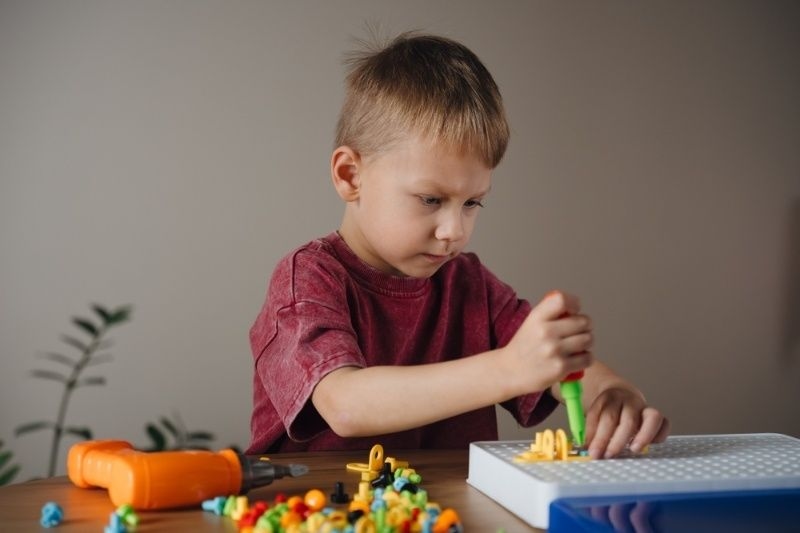
A small amount of setup stretches playtime considerably. These indoor DIY games for kids call for things you almost certainly already have at home.
- Indoor Bowling: Stand empty water bottles in a triangle at the end of a hallway and roll a tennis ball at them. Keep score and let older kids do the addition themselves.
- Laundry Basket Sock Toss: Ball up a few pairs of clean socks and set a laundry basket a good distance away. Kids toss the socks in and keep score. It's safe and quiet, and the socks land exactly where they should.
- Balloon Keep-Up: Blow up a single balloon and lay down one rule: it cannot touch the floor. That is it. Young kids love it; it burns real energy, and nothing else is needed.
- DIY Outdoor Tic-Tac-Toe: Spread a plastic tablecloth on the grass, run duct tape across it to form a grid, and use two colors of paper plates as playing pieces. It stores flat and holds up all summer.
- Pom-Pom Drop (great for toddlers): Tape a chain of paper towel tubes to a wall and drop colorful craft pom-poms in at the top. Watching them travel down teaches young children about cause and effect in a hands-on way.
Matching Games to Your Child's Age
Picking the right game for your child's age makes a noticeable difference in how long it holds their attention.
- Ages 2 to 4: Sensory Bin Treasure Hunt, Bubble Blowing Chase, and Color Sorting Race all hit the mark. Stick with activities built around touch, movement, and repetition.
- Ages 4 to 6: Red Light Green Light, a shape hunt around the house, and DIY matching cards on index cards work well. Clear, simple rules and small wins build real confidence at this stage.
- Ages 6 to 10: A Color Scavenger Hunt, Charades with written prompt cards, and a DIY Indoor Scavenger Hunt with paper clues all work well here.
- Ages 10 and up: A rock-paper-scissors tournament bracket and a backyard obstacle course built from whatever is outside keep this group genuinely hooked.
- Mixed ages: Hot Potato and Duck Duck Goose both scale well. Drop the elimination rules for younger children while older ones compete normally, and everyone stays in the same game.
5 Tips to Get More From Every Game
- Hand over some control. Kids who help shape the rules of a game stick with it longer and bring more of their own creativity to it.
- Rotate who leads. Whether it is Simon, the Traffic Light caller, or the storytelling opener, every child deserves a turn up front. This matters especially for quieter kids.
- Keep a simple games kit ready. A small box holding pre-rolled socks, one balloon, and a pack of index cards means you are ready in seconds when boredom hits.
- Connect one game to the next. A color scavenger hunt feeds right into indoor bowling if you use the collected items as pins. Chaining activities together keeps the energy going longer.
- Stop before the fun runs out. Wrapping up while excitement is still high leaves kids asking to play again, rather than dragging through the last few rounds.
More to Discover: Separation Anxiety in Children: Causes and Solutions
Conclusion
The best toy in your home is not sitting in a box or plugged into a wall. It is a little imagination, a few ordinary objects, and someone willing to play. DIY games for kids do not need a budget, a plan, or a trip anywhere. They just need you to say yes. Choose one game from each section and give it a try this week. These indoor game ideas and DIY kids' games and activities are proof that a genuinely great afternoon costs nothing at all. You might be surprised how much fun hides in a laundry basket.
Frequently Asked Questions
What age are DIY kids' games and activities best suited for?
DIY kids' games and activities suit children from age 2 right through the tween years. Match the game to your child's development stage. Toddlers thrive with sensory and movement activities, while older children enjoy games that involve strategy and friendly competition.
Can indoor DIY games for kids count as physical activity?
Absolutely. A living room dance-off, a sock toss challenge, or a balloon keep-up session gets little bodies moving more than most parents expect. When going outside is not an option, these games genuinely fill that gap without any equipment needed.
How do I keep indoor game ideas feeling fresh over time?
Swap out one rule or one object each time you play. Use a stuffed animal instead of a ball for hot potato, or try a different lane shape for indoor bowling. Small changes to familiar indoor game ideas make them feel brand new without any extra preparation.
This content was created by AI