

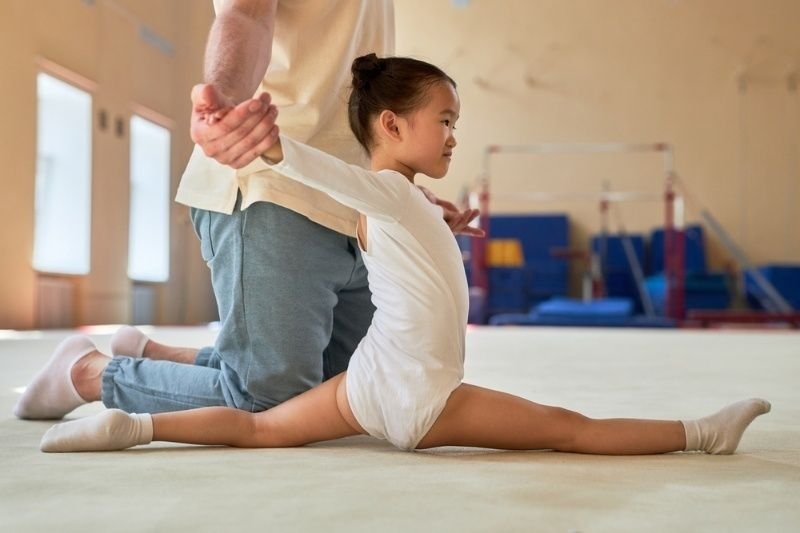
Staying physically active is a more crucial issue for children than ever before. According to the WHO, children aged between five and seventeen years must participate in a minimum of sixty minutes of moderate-intensity physical activity each day. There are many benefits of gymnastics for kids, from better growth to identity development. However, making exercise enjoyable and exciting for children can sometimes be difficult. This is where games like gymnastics for kids come in handy.
These gymnastics activities help to enhance children's flexibility, balance, strength, coordination, and confidence in a fun way. They are very beneficial in schools, PE classes, birthday parties, and as home-based indoor activity sessions. The good thing about the following gymnastics activities is that they don't require much equipment and can be adapted for various ages.
Here is a selection of exciting gymnastics games for kids that promote movement, teamwork, and imagination. Beneath each activity, you can also find the required equipment, how to play, and helpful hints.
Obstacle courses are among the most favorite preschool activities that incorporate movement, coordination, and balance in a playful way.
Design stations where children jump through hoops, crawl under tunnels, balance on tape lines, and roll over mats. Time them or let them complete the course at their own pace.
Use lower obstacles for younger children and those made of soft material. Regularly vary the route to keep children entertained.
Strengthening muscles and improving coordination are among the major benefits of this game. It is time-consuming and rewarding at the same time.
Designate different movements to represent various animals: a bear crawl, crab walk, bunny hop, or frog jump. The children have to race to a certain point from another using the given movements.
Ensure children are rewarded more for their efforts and fun than their speed if you have young kids participating in the game.
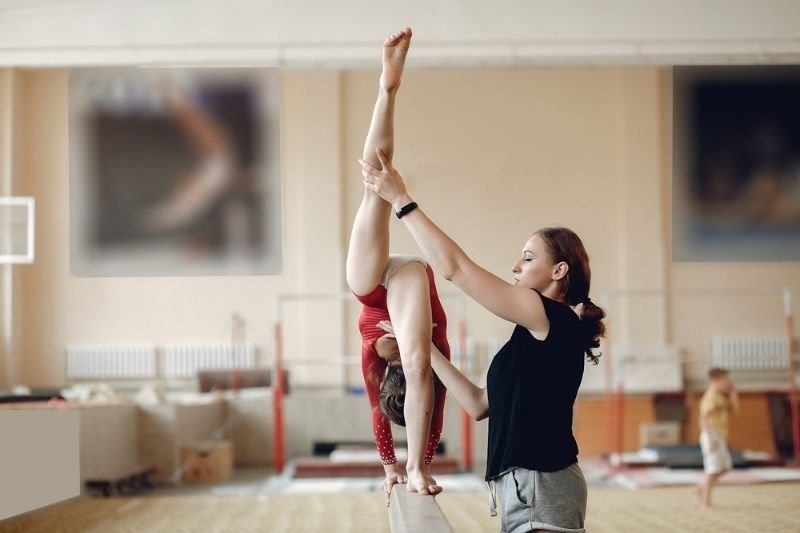
This balance activity requires children to develop coordination and concentration skills.
Children walk on the beam while music plays. When music is switched off, they must freeze without losing their balance.
For very young children, use the balance tape on the floor instead of the beam, and slightly widen it if necessary. Have kids try different beam poses to boost their confidence.
This game can help you introduce the fundamentals of gymnastics skills and activities for kids in a less intimidating setting.
Tell your children phrases like the following:
Children should only move if the phrase begins with "Simon says.
Try mixing a few easier gymnastics activities with harder ones for kids. You can include a few stretches to help children warm up.
This is an excellent activity to practice group coordination and team building.
Children must work together, holding the edges of the parachute with the balls in the center, and shake it until the balls bounce away without falling off.
This game is also great for younger children, as the foam balls are very light and harmless.
If your child enjoys learning new gymnastics moves, cartwheel stations can help them practice this and other elementary gymnastics activities.
Mark the ideal positions for the child's hands and feet using tape and help them learn how to do a cartwheel. Make sure you supervise them and encourage slow and controlled movements.
Correct their posture first, then work on speed and flow. Kids who struggle can practice leaning on a wall when attempting a cartwheel.
This is an easy way to enhance coordination and control movements.
Children should keep the balloon in the air without it touching the floor, using just a specific body part or the whole body.
If your child is very young, you can start them off with a slightly larger, softer balloon so it bounces more slowly and is easier to control.
Forward rolls are among the first basic movements that children learn in gymnastics.
Children should begin the forward roll at one end of the mat and finish at the other, competing alone or in teams.
Always supervise young children when they attempt a forward roll and ensure that the mats are thick enough to protect the child's neck and head.
Gymnastics games contribute to both children's physical and mental well-being. As confirmed by the WHO and multiple studies, children who exercise frequently also develop greater coordination, more refined social skills, and better concentration in school.
Through gymnastics activities, children are able to:
However, the most critical element is that these activities will ensure children find working out and exercise fun.
Child safety is a priority when involving children in any physical activities. Experts suggest:
Children must wear comfortable, non-restrictive clothes so that they have freedom of movement.
Gymnastics games for kids are undoubtedly a fantastic combination of exercise, coordination, and imaginative play. From balance and obstacle course challenges to the parachute popcorn game and forward rolls, these games can guarantee your child's daily dose of physical activity while also developing several of their physical and social skills.
What parents and teachers should keep in mind is that you don't need to go over-the-top when teaching a young child any form of gymnastics. Some simple preschool gymnastics games will do wonders for your child's coordination, confidence, balance, and teamwork skills, making exercise a pleasant and enjoyable activity for them.
The more you try to encourage these kinds of games, the more you make it possible for children to find joy in exercising. If you use simple gymnastics activities for kids and a little bit of supervision, along with adequate care, your children will love doing this together with you every single day.
Simple gymnastics activities for young children are usually suitable from the ages of two to three, as long as supervision is provided. Preschool gymnastics activities predominantly involve balance, coordination, and movements, but not difficult techniques. Children's gymnastics classes often start at age five or six, depending on their development and interest in the activities.
Yes, many gymnastics games for kids can be perfect to play at home. All you really need is some padding and maybe balloons. You can use tape lines, mats, or floor-mounted tape to ensure safety when children practice gymnastics moves and develop their coordination, balance, and reflexes. Indoor play sessions are especially appropriate on days with bad weather or during PE class.
Children need to be active regularly. Just two or three days of twenty- to thirty-minute gymnastics exercises per week will significantly improve their balance, coordination, and muscle power. The important thing in gymnastics activities for kids is always to have fun and move, not to push too hard, particularly for very young children.
This content was created by AI