

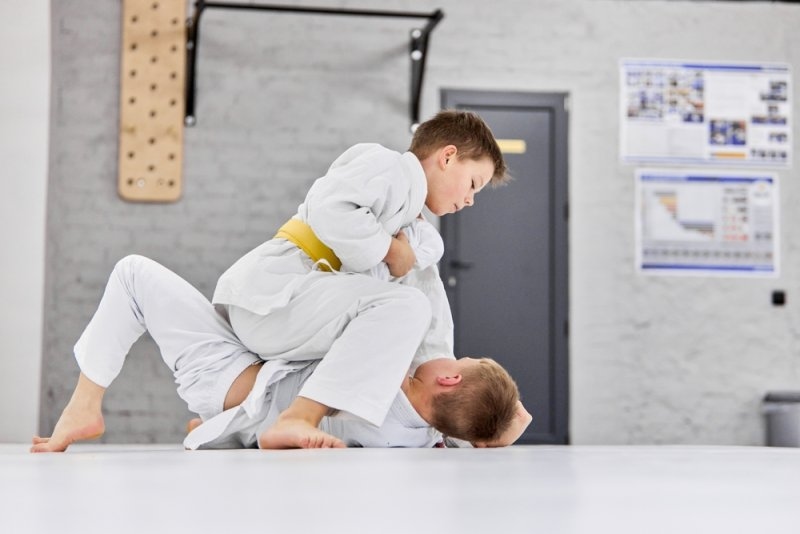
Martial arts for kids do more than teach self-defense—they boost kids’ confidence, improve focus, keep them active, and instill valuable life lessons that go way beyond the training floor. “Children ages 6 to 17 should get at least 60 minutes of moderate-to-vigorous physical activity every day, and this is a fun and engaging way to make that happen,” states the Centers for Disease Control (CDC). Not to mention, the sport also cultivates kids’ mental and emotional growth.
Kids are all different—some thrive on high-energy endeavors, others prefer disciplined instruction.
“Knowing what to expect, the pros and cons, the best ages to start, and what to look for in a class for your child will set them up for success.” This guide looks at seven popular martial arts styles that cater to different interests, ages, and abilities and provides an understanding of the comparison between karate and taekwondo for kids.
Most likely the most popular martial art for kids, Karate is the ideal beginning point. “This disciplined style consists of kicking, punching, blocks, balance, and coordinating movements, and instructors can help improve focus, discipline, and confidence by breaking down and demonstrating new moves,” says the Cleveland Clinic.
“When kids get awarded new belts as they progress, their confidence and sense of accomplishment grow.” This choice of martial arts also helps children become more accountable and develop respect for authority and peers.
If your child loves being active and doing high-energy moves, Taekwondo will likely suit them. “Taekwondo can do wonders for a child’s flexibility and balance, and the fast-paced kicks and movements help kids to become more athletic and coordinated,” the Mayo Clinic shares.
“Kids in a Taekwondo program are also encouraged to show discipline, perseverance, and respect towards their peers and teachers.” The belt-ranking system makes it exciting for kids to reach personal goals, with rewards that motivate children to never give up, even during the toughest practices.
Unlike other martial arts styles, Judo focuses on throws, balance, and grappling rather than striking, making it accessible to people of many different sizes and ages. The goal is to overcome with skill rather than strength, according to the Cleveland Clinic.
Kids learn how to remain calm, problem-solve, and persevere when facing challenging situations both inside and outside their training. “The discipline learned on the mat through practice and overcoming adversity also translates well into other areas of a child's life, including school and home.”
While not traditionally used to harm others, Brazilian Jiu-Jitsu (BJJ) is an effective form of self-defense that helps kids build confidence, patience, and strategy. “This style of martial arts specializes in groundwork and uses the principles of leverage to control and subdue opponents,” explains The Medical Futurist Institute.
“In BJJ, children are encouraged to think critically, solve problems, and be strategic about their moves.” Because many moves require paired interaction, your child is likely to experience positive changes in their social interactions with classmates.
“Kung fu’s blended approach combines multiple disciplines, requiring its practitioners to be adaptable,” the Cleveland Clinic suggests. “Through the combination of graceful movements, balance, and flexibility training, Kung Fu improves coordination, concentration, body awareness, and confidence.
As students learn varied techniques, including various striking methods,” according to the American Council on Exercise, “they also cultivate self-control and perseverance that serve them beyond the classroom. Learning Kung fu can make kids more attentive students in school as well, due to the focus on concentration and following instructions.”
Unlike other combative arts, Aikido offers kids an advantage that many dojos don't: It teaches children how to remain at peace, even in conflict. This means teaching your child how to use defensive principles and not to approach conflict with an aggressive mentality.
As part of a system focused on redirecting an opponent’s energy rather than opposing it head-on, it can teach children problem-solving techniques, peaceful problem-solving, and the art of controlling emotions, rather than letting emotions control them.
MMA classes are popular among both children and adults these days, and as can be seen, they offer some amazing benefits. “Kids can learn a multitude of stances and techniques from many martial art disciplines,” states SportsCoach.net, and because kids will engage with others that are of similar height, size, and age, and also because these forms are not typically competitive, it’s possible to find an MMA program that fits what you’re looking for in terms of safety.”
Many qualified MMA instructors work with all age groups in a well-structured, safe way, emphasizing the disciplines of coordination, fitness, focus, respect, and balance that guide any child through a successful program of self-awareness and achievement.
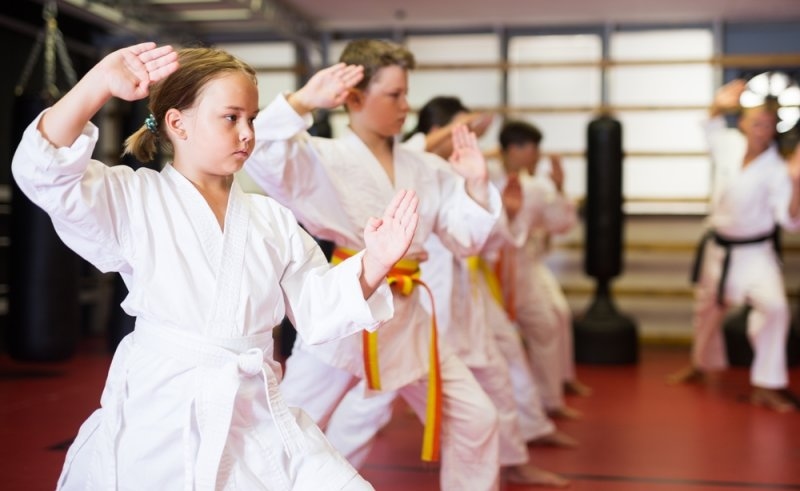
You’re asking why martial arts are becoming such an attractive option and a popular choice here in the US for so many of our kids? This answer goes beyond the merely physical.
“Here are some of the top benefits of martial arts families see when their children attend martial arts training”:
Students gain confidence from developing physical and mental skills,” states the Cleveland Clinic
“Children in the United States who attend regular martial arts classes not only improve their balance, but concentration and discipline also go way up with consistent instruction,” according to SportsCoach.net.
Children who have completed martial arts classes are expected to have regained greater physical strength and improved flexibility.
"The mind and the body work in unison to provide these positive changes that carry over into other aspects of a child's life as well.” It is also very common for martial arts instructors to notice improvement in kids who lack classroom confidence and in kids who may even be in programs to work out their ADHD issues.
Many martial arts schools will begin taking children as young as four to participate in basic movement classes that can help improve balance and teach youngsters to respond to instructions.
Kids aged between six and eight will typically take to basic forms and more structured routines without issue, and any older child can begin just about any of the martial arts listed herein with relative ease.
One of the most significant aspects of Martial Arts training that appeals to parents is discipline. “Kids are taught from the early days to show respect to teachers and peers and to not be disrespectful and follow instructions,” the Mayo Clinic reports.
“As they continue their education and advancement in martial arts, kids learn the discipline necessary to make steady progress in anything they do. Since mastery is unlikely for at least a couple of years, children must learn to be patient and persistent and to accept the challenge of overcoming difficult tasks in the course of their training and overall development.”
Every child has a different personality and interests, which have the greatest bearing on their success in Martial Arts training. When deciding on which class is right for your child, think about what your kid’s inclinations are:
Watching one or more classes will provide significant clues into what type of learning your child may be attracted to, as well as how encouraging the teaching atmosphere is. The perfect instructor is key to creating a lifelong positive experience for your child and to fostering a lifelong learner and enthusiast for Martial Arts.
Whether your child prefers the striking action of karate or taekwondo or favors a more defensive strategy such as Aikido, every style of Martial Arts provides children an invaluable opportunity for both physical and character development.
When looking for the ideal martial arts class for your kid, prioritize an environment that fosters motivation, encouragement, and positive interaction—this will set your child on a path to greater self-belief and lasting life lessons.
Absolutely. “Through steady, consistent instruction, children who partake in martial arts training begin to develop positive attitudes and grow in confidence,” say professionals at The National Academy of Sports Medicine.
Many programs recommend two to three sessions per week for beginner students to gain the best advantage, but families should ultimately choose a schedule that fits their child’s interests and family life.
“Some martial arts centers require students to wear uniforms to start, while others may let beginners wear casual attire for their trial classes,” explains the Cleveland Clinic. As students advance, instructors will advise on the appropriate equipment and uniforms for continued training.
This content was created by AI