

Watching your little one take their very first wobbly steps across the living room rug fills your heart with unforgettable pride. Supporting gross motor skills during early childhood lays the physical foundation for every playground climb, bike ride, and confident leap ahead. According to developmental benchmark data from the Centers for Disease Control and Prevention and the American Academy of Pediatrics, roughly ninety percent of toddlers walk independently by eighteen months, while active daily movement strengthens brain neural pathways linked to classroom focus. When children master whole-body coordination early, they explore the world with joyful independence.
Understanding how large muscle groups develop takes the worry out of comparing your child to peers at the park. It helps you turn everyday playtime into purposeful strength-building moments at home.
In this practical parenting guide, we explain what are gross motor skills, explore examples of gross motor skills in children, compare gross motor skills vs. fine motor skills, outline gross motor skills developmental milestones by age, share gross motor skills activities for toddlers, and highlight signs of gross motor skill delay in children.
Asking what are gross motor skills introduces the whole body physical abilities that rely on large muscles in the torso, arms, and legs.
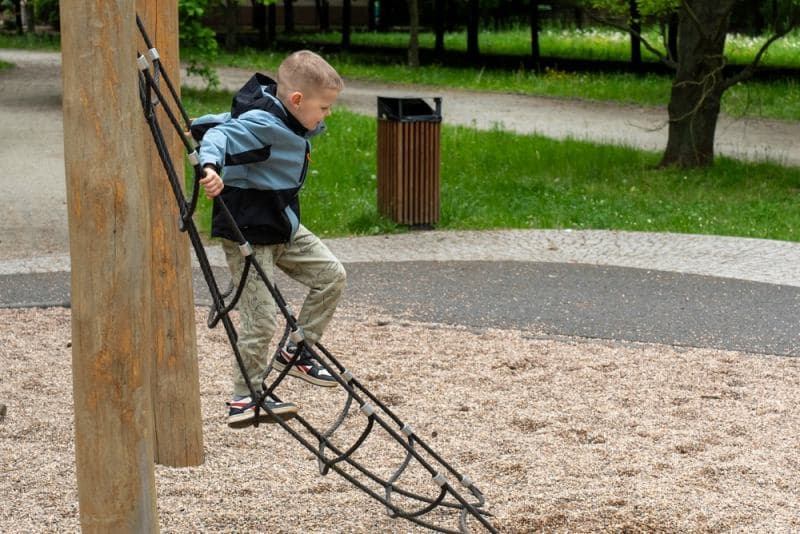
Whenever kids roll over, sit upright, jump over puddles, or pedal a tricycle, they coordinate major muscle groups alongside their central nervous system. Strong gross motor skills in children support healthy posture, postural stability, balance, and physical endurance throughout daily school and play routines.
Reviewing practical gross motor skills examples helps parents recognize how much physical coordination goes into simple childhood games.
Must Try: Life Skills Activities for Kids, A Simple Parent Guide
Comparing gross motor skills vs. fine motor skills clarifies why children typically develop large body strength before mastering delicate finger control.
| Developmental Area | Gross Motor Skills | Fine Motor Skills |
| Primary Muscle Groups | Large muscles in legs, arms, back, and core torso | Small muscles in fingers, wrists, hands, and toes |
| Core Physical Purpose | Balance, posture, mobility, and full-body strength | Precision, hand-eye coordination, and object manipulation |
| Everyday Childhood Examples | Running, climbing stairs, jumping jacks, riding bikes | Holding crayons, stacking blocks, zipping jackets, using spoons |
| Developmental Sequence | Develops first from head to toe and center outward | Builds upon stable shoulder and core postural support |
Tracking gross motor skills developmental milestones by age gives parents a helpful roadmap of how physical strength progresses from infancy through early elementary years.
Babies push up on forearms during tummy time by three months and sit around six to eight months independently. Most infants pull themselves up to stand along furniture and take supported cruising steps before their first birthday.
Developing gross motor skills for toddlers brings rapid mobility as children walk steadily, squat to pick up toys, and climb onto low couches. By age two, most toddlers kick a ball forward, run with improving balance, and walk up stairs holding a railing.
Preschoolers pedal tricycles smoothly, hop confidently on one foot, and catch large bounced balls against their chest. By age five, most children skip smoothly, swing independently on playground swings, and climb ladders with alternating feet.
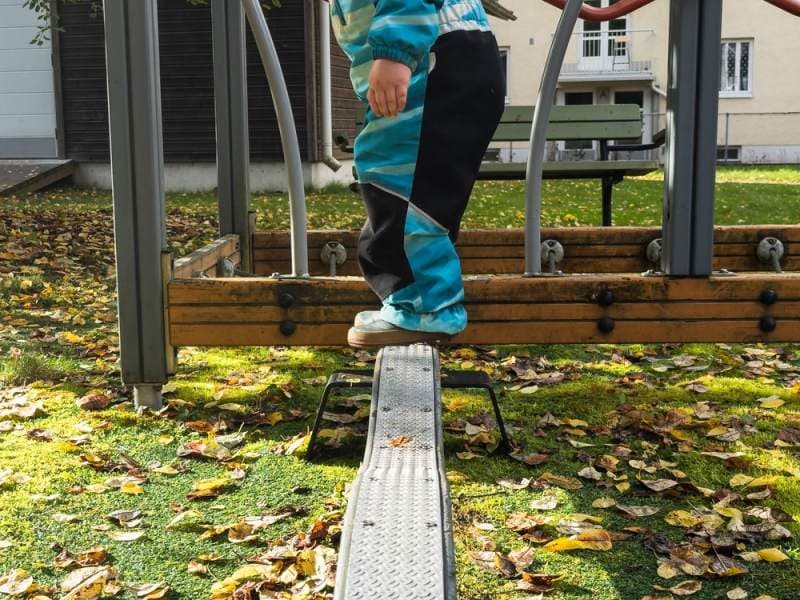
Learning how to improve gross motor skills in children works best when movement feels like an exciting game rather than a chore.
Try This: Learn How Puzzles Can Help in Child Development and Learning
Knowing the early signs of gross motor skill delay in children empowers caregivers to seek supportive pediatric evaluation promptly.
Nurturing whole body movement during early childhood builds far more than physical strength; it fosters confidence, curiosity, and joyful independence. Throughout this parenting guide, we defined how large muscle coordination works, explored everyday playground movement examples, and contrasted whole body stability against delicate finger control. We also mapped key physical milestones from infancy through preschool, shared playful indoor movement games, and highlighted early signs that warrant a quick conversation with your pediatrician.
Giving kids daily space to climb, balance, jump, and explore sets them up for lifelong physical wellness. Every small backyard game strengthens growing muscles and brightens young minds.
To discover printable movement games, creative indoor play ideas, and engaging childhood activities designed for growing kids today, explore our kids activity resource hub to inspire playful learning every day.
According to American Academy of Pediatrics guidelines, toddlers should accumulate at least one hundred eighty minutes of varied physical activity spread throughout each day, including energetic active play. Preschoolers aged three to five benefit from at least three hours of daily movement combining structured parent-led games and unstructured outdoor exploration.
Yes, daily supervised tummy time starting from the newborn stage strengthens neck, shoulder, back, and core abdominal muscles essential for rolling, sitting, and crawling. Pediatricians recommend starting with short three- to five-minute sessions two or three times daily and gradually increasing duration as your baby grows stronger and happier on their belly.
Walking barefoot indoors on safe surfaces allows sensory nerves on the soles of a child's feet to feel ground textures directly, strengthening foot arches and ankle stability. Pediatric physical therapists frequently recommend barefoot indoor play because direct ground feedback helps toddlers adjust posture and improve natural balance much faster than stiff shoes.
Open-ended active play toys such as foam climbing blocks, balance boards, push wagons, soft sensory balls, hopscotch mats, and balance bikes encourage continuous whole-body movement. Unlike electronic battery-operated toys, active movement gear invites kids to squat, push, steer, and balance repeatedly while building coordination naturally.
If you notice persistent movement challenges or missed physical milestones, schedule an evaluation with your child's pediatrician first to discuss developmental screening. Parents in the United States can also contact their state Early Intervention program directly for children under age three or their local school district for free pediatric physical therapy assessments.
This content was created by AI