


Mental health is just as important as physical health. With the pressures of school, social media, and technology in general, it's more important than ever to encourage kids to disconnect and reconnect with nature whenever possible.
Environmental psychology research demonstrates that incorporating outdoor classroom learning into pediatric education reduces cortisol levels and behavioral stress in elementary students by up to 28%, significantly boosting daily mental well-being.
People might not often think of outdoor classrooms as a tool for promoting children's mental health and well-being, but believe us.
They are an amazing resource for that very thing!
With so many indoor activities for kids, like libraries, museums, video games, and other tech-heavy activities readily available, it can be easy to overlook the importance of being outdoors—especially when you consider how much time kids spend in school! But there are so many amazing benefits of outdoor classrooms for kids' mental health.
First of all, how important is mental health, and why should we care about it? Well, mental health is just as important as physical health.
It's crucial for children to feel good about themselves, confident, and content with the direction their lives are going. Positivity and self-assurance bring up a world of possibilities. It also makes life simpler and less stressful, which is why it's crucial to promote kids' outside exploration and tech-free time as much as possible.
Being happy also means that kids can focus better and are less likely to suffer from anxiety or stress, which can affect their ability to learn and their overall health.
As kids are likely spending more time in school than ever before, it's important that we encourage them to disconnect from technology and focus on what's happening in front of them.
Here they are:
Let's begin with exercise, which is one of the most evident and significant advantages of outdoor classrooms for kids' mental health. When kids are stuck all day indoors, they aren't getting as much exercise as they should be. And in this day and age of technology, kids are getting less and less exercise and fresh air both inside and outside of school.
This can have major impacts on mental health and well-being. It has been demonstrated that exposure to fresh air can lower tension and anxiety, elevate mood, and boost vitality.
An important benefit of outdoor classrooms for kids' mental health is that being in nature helps with focus. Numerous people report feeling less stressed when they are around plants and trees, according to studies. Kids may find it challenging to concentrate and study if they are nervous or anxious.
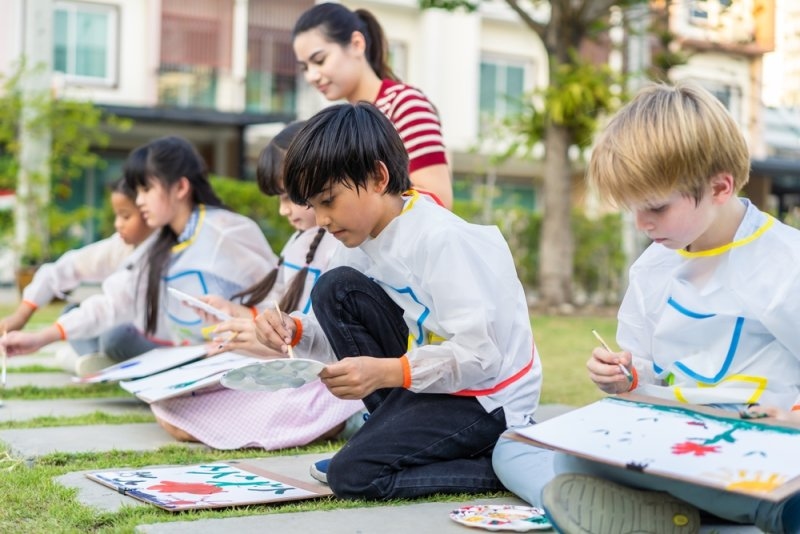
Did you know that being outside can actually increase the size of the brain? This is known as neurogenesis, the growth of new neurons in the brain. This has been proven to occur when kids are exposed to nature, and it's thought that the increase in neuron activity may be linked to an increase in endorphin (the feel-good hormone) levels when kids are outside. These benefits can be especially important for children who have experienced trauma and who may be experiencing mental health issues.
Yes, you read that correctly. Being outside can actually increase creativity! This might be because there are fewer outside distractions when kids are playing.
According to research, children's physical activity increases while they are outside. This is especially true for children who have Attention Deficit Hyperactivity Disorder (ADHD).
Children with ADHD are often drawn to nature and have been found to be more active when they are outside. Increased physical activity is important for a number of reasons.
Finally, being outside has been proven to improve academic performance for children.
Many studies have been conducted to determine the best environment for learning and have consistently shown that outdoor classrooms are better for a child's ability to learn.
There are also some environmental benefits to being outdoors that indoor schools don't have. Being outside can help reduce carbon emissions and save money on energy costs.
As we've seen, being outside and around nature has been proven to reduce stress for many people. Being around the great outdoors has been proven to help children de-stress and calm down. Stress is increasingly becoming a problem among children, and it can be hard for them to understand what is causing them to feel stressed.
It's important for parents to talk to their children about what brings them stress so they can try to avoid or de-stress when necessary. Being outdoors has been proven to help kids de-stress and calm down so they can focus better and be more productive. This is important for many reasons. It helps kids achieve better results in school and boosts creativity and collaboration.
Exercise is beneficial for a variety of mental health conditions, including depression and anxiety. Children should be as active and move around as much as they can to promote mental wellness.
Physiotherapists say that these "active breaks" can help boost mental health, academic performance, and physical fitness. Kids should be encouraged to get outside as often as possible to be active.
We've seen how being around nature can help kids de-stress and reduce anxiety and stress. And technology is often cited as one of the biggest causes of stress and anxiety for many people. More time than ever before is being spent on electronics by children nowadays.
Must Try: Is Screen Time Damaging Your Children's Mental Health?
Being outdoors is important for a child's mental health. This is not only because of the fresh air and exercise but also due to the fact that being in nature can help lower stress and anxiety. This can be especially important for kids who have experienced trauma, as it can help boost their mental health.
Children today spend less time outside and more time inside than ever before. This can hurt their mental health. Therefore, we must urge them to spend as much time as they can outside, being active and surrounded by nature in order to relieve their tension and worry.
Visit Kidsactivitypage.com for more information, tips, and advice for helping your kids grow and develop with all the attention and care they need.
Regular exposure to natural green settings reduces core symptoms of inattention and impulsivity in children with ADHD by offering calming sensory input and natural avenues for physical movement.
Schools establish clear temperature thresholds, mandate appropriate seasonal gear like rain boots or winter layers, and maintain quick access to indoor shelter during extreme weather events.
Morning and early afternoon sunlight exposure regulates a child's circadian rhythm, promoting healthier nighttime melatonin production and improving overall sleep quality.
Designing wide, paved, or packed-gravel pathways alongside wheelchair-accessible raised garden beds allows all students to navigate and participate in nature-based lessons equally.
Urban schools can transform asphalt courtyards using raised planter boxes, portable wooden seating circles, native potted flora, and vertical green walls to create effective micro-nature learning spaces.
This content was created by AI