

Measles cases in the US have reached their highest level in over 30 years, with more than 2,260 cases reported so far in 2026. Most of these cases are showing up in unvaccinated children and teens. If you're a parent trying to make sense of all the headlines, you're definitely not alone. Here's what's actually driving this outbreak, what to watch for, and how to keep your family protected.
Measles is one of the most contagious diseases doctors know of.
If an infected person walks into a room, up to 9 out of 10 unprotected people nearby can catch it just by breathing the same air. And that's even if the person left hours earlier.
That's exactly why this year's measles outbreak has been so tough to contain. The virus travels through coughing and sneezing, and it can linger on surfaces for up to two hours.
The real problem here isn't a scarier version of the virus. It's a vaccination gap.
A few things are fueling that gap:
So a person infected abroad can unknowingly bring the virus home. And the moment they cross paths with an unvaccinated community, that's enough to spark a fresh measles outbreak.
Measles doesn't announce itself with a rash right away, and that's part of why it spreads so easily before anyone realizes what's happening.
Symptoms typically show up in this order:
| Timing | What to Expect |
| Days 1 to 4 | High fever (often above 101°F), runny nose, dry cough, red or watery eyes |
| Days 2 to 3 | Tiny white spots inside the mouth (Koplik spots) are a classic early clue |
| Days 3 to 5 | Fever climbs higher, and a flat red rash starts at the hairline and spreads downward |
| Day 5 onward | Rash covers the trunk and limbs, and the fever gradually breaks |
Measles symptoms can easily be mistaken for a bad cold at first. That's why doctors say don't brush off a fever with red eyes and a cough, especially if there's been any chance of exposure. A person is contagious for four days before the rash appears and for four days after, so kids can spread it before anyone even knows they're sick.
Most people recover within 2 to 3 weeks, but measles can lead to serious complications, including ear infections, pneumonia, and, in rare cases, swelling of the brain. Roughly 1 in 5 unvaccinated people who get measles in the US end up hospitalized.
Measles in children is where this outbreak is hitting the hardest. Kids and teens make up most of this year's confirmed cases, and children under five face the greatest risk of severe illness.
A few reasons young kids are especially vulnerable:
If your child has a fever, cough, and red eyes, and you suspect measles in children somewhere in your household or community, call your pediatrician before heading to the office or ER. That gives the clinic a chance to isolate your child and stop the virus from spreading to other patients.
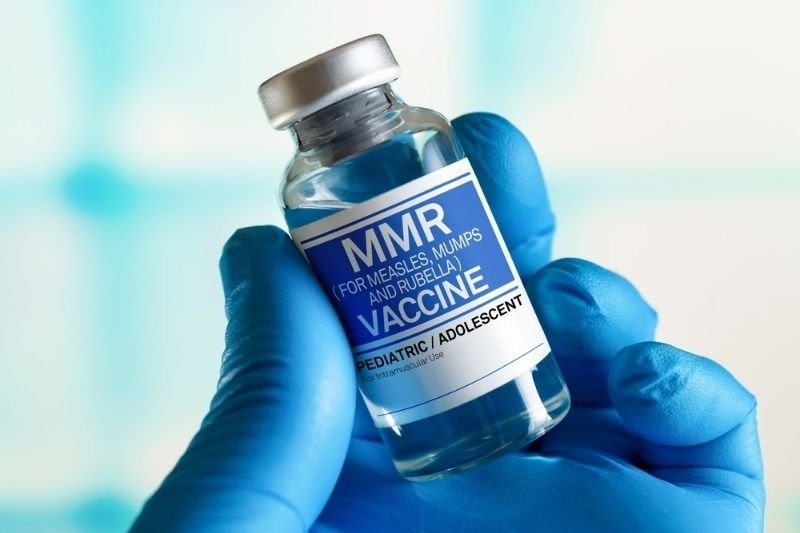
The MMR vaccine protects against measles, mumps, and rubella in a single shot, and it works remarkably well. One dose gives about 93% protection. Two doses push that number up to roughly 97%.
Here's the standard schedule pediatricians recommend:
| Dose | Recommended Age |
| First dose | 12 to 15 months |
| Second dose | 4 to 6 years (school entry) |
Babies traveling internationally, or living in an active outbreak area, can sometimes get an early dose as young as 6 months. Talk to your pediatrician about timing if this applies to your family.
Under the Affordable Care Act, the MMR vaccine is covered at no cost for most private insurance plans and Medicaid. The Vaccines for Children program also offers free doses for uninsured and underinsured kids, and local health departments often have low-cost options for adults who need to catch up.
Not sure whether you or your child is fully vaccinated? Your pediatrician's office or state immunization registry can usually pull up the records for you.
Measles prevention really begins with vaccination, but honestly, there’s more you can do to keep your household safer, especially if you’re living near an active outbreak.
These steps matter most in communities where vaccination coverage has already dipped below the herd immunity threshold. That's exactly where one case can snowball into a larger measles outbreak.
This year's numbers are sobering, but the message from pediatricians hasn't changed. Measles is preventable. Two doses of the MMR vaccine remain about 97% effective, and most of 2026's cases are among unvaccinated people. Keeping to the recommended childhood schedule, noticing early symptoms, and moving fast if you think someone was exposed are still the strongest defenses families have right now against this outbreak.
A person can spread measles starting about 4 days before the rash appears and continuing for 4 days after it appears, which is why it spreads so easily before anyone realizes they're sick.
It can happen, but it's uncommon. Two doses of the MMR vaccine protect about 97 out of 100 people. And on the rare occasion that someone does catch it, it tends to be a much more manageable illness than what an unvaccinated person might experience.
Call your pediatrician right away, even if your child feels fine. They can advise on monitoring, post-exposure vaccination options, and whether your child needs to stay home from school or daycare.
Yes, and it’s not really a brand new issue. This vaccine has been studied for decades, and the CDC, along with pediatric clinicians across the country, still endorses it as a standard part of care for children.
This content was created by AI