


Every parent has been there. The toys are everywhere, dinner is burning, and your child is mid-meltdown for the third time that afternoon. Your voice goes up before you even realize it. Most American parents hit this wall regularly, and the guilt that follows is real. Here is the thing, though: knowing how to discipline a child without yelling is not about being a perfect parent. It is about finding tools that actually move the needle. Punishment and raised voices feel like control, but the research tells a different story. This guide breaks down what works and why.
Picture this. You yell. Your child stops what they are doing. Problem solved, right? Not quite. That pause you get is fear-driven, not lesson-learned. The American Academy of Pediatrics has stated clearly that yelling and corporal punishment are minimally effective in the short term and offer nothing lasting. A 2023 study reviewing over 160 earlier studies found that verbal aggression toward children can cause harm on par with physical or sexual abuse. That is not a small finding.
Kids who grow up in high-yell households are more prone to anxiety, depression, and behavioral acting out. And here is the irony: the more you yell, the less effective it gets. Children tune it out over time, which only pushes parents to get louder. It becomes a cycle that serves nobody.
Physical punishment has its own set of consequences. Children learn by watching. When hitting or spanking is part of the picture, they absorb the message that force is how you solve problems. That shows up later in their friendships, their classrooms, and eventually in their own parenting.
These are real child behavior problem solutions that American parents need every day, not stricter rules but smarter, calmer responses.
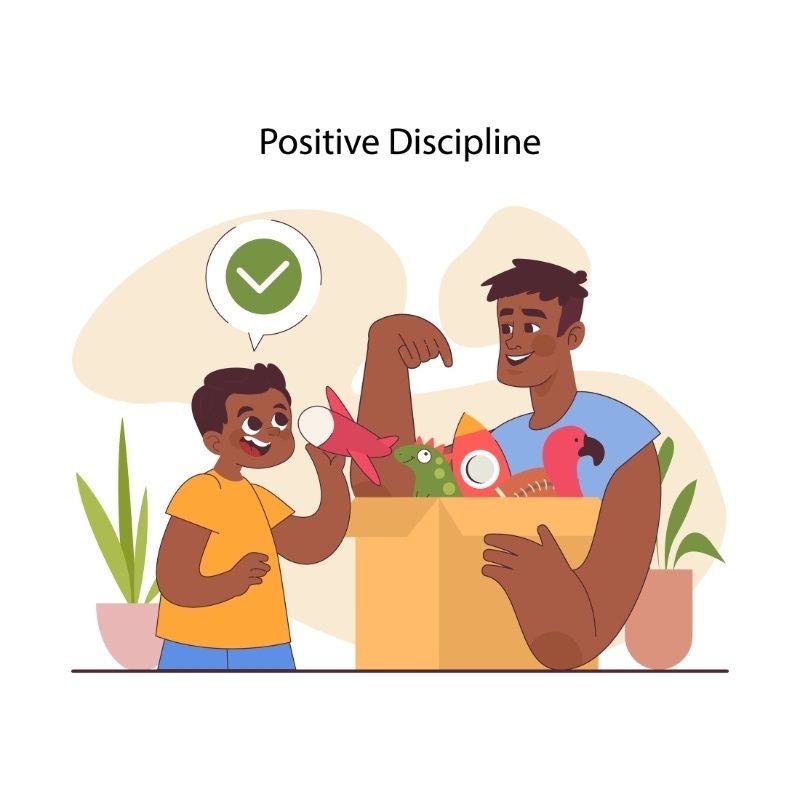
Here is a shift worth making. Discipline and punishment are not the same thing, even though most people use them interchangeably. Punishment is about making a child pay for what they did wrong. Discipline is about making sure they understand what to do differently next time.
Positive discipline for kids operates on this second idea. It is not soft parenting. It is targeted parenting. You are building self-control, cause-and-effect thinking, and genuine accountability in your child rather than just short-term compliance.
Straightforward methods that reduce tantrums, improve cooperation, and make discipline feel more manageable in everyday situations.
Kids learn a lot from reality. If your child keeps leaving their bike outside, it gets rained on. If they skip breakfast, they are hungry by 9 a.m. These natural consequences stick better than any lecture because life delivered them, not you.
When natural consequences are not immediate enough to matter, logical ones work well. Your child refuses to pick up their toys before dinner? Dinner waits. The consequence connects directly to the behavior, which makes it feel fair rather than punitive. This is one of the most effective child behavior problem solutions because it puts responsibility squarely on the child, not the parent.
One of the most overlooked toddler tantrum tips is this: swap the negative instruction for a positive one. "Stop running in the house" lands differently than "Walk, please." The first puts the behavior front and center. The second gives your child something to actually do.
Toddlers especially need concrete direction. Their brains are still building the ability to infer meaning from vague requests. Specific, calm language removes the guesswork and cuts down the back and forth considerably. Keep it short and keep it clear.
Redirection is one of those toddler tantrum tips that sounds simple but takes real practice. When you catch your child starting to spiral, do not wait for it to peak. Switch the activity, move to a different room, and bring in something new to focus on.
The key is timing. You are looking for the earliest signs of frustration: the fidgeting, the whining, the eyes going sideways at a sibling. Step in then. It is much easier to redirect a child who is getting restless than one who is already on the floor screaming. Think of it as prevention, not avoidance.
The traditional timeout, sitting in a corner as punishment, does not teach much. A calming timeout is different. It gives your child a quiet space to settle, maybe with a comfort object or a few minutes with a book they like. The goal is regulation, not isolation.
This works for parents, too. Discipline without yelling starts with knowing your own triggers. Stepping away for two minutes before you respond is not a weakness. It is a strategy. When both of you are calm, that is when the real conversation can happen about what went wrong and what to do instead.
Figuring out how to handle defiant children often means flipping the script on attention. Kids who act out frequently are kids who have learned that misbehavior gets a response. Praise good behavior consistently and specifically, and that pattern starts to shift.
Skip the generic "good job." Try, “I noticed you shared your snack with your sister without being asked.” That was really kind. "Specific praise lands deeper and reinforces the exact behavior you want repeated. Positive discipline for kids is largely built on this principle, and it holds up across every age group.
Knowing how to handle defiant children means staying honest about your own stress. You cannot consistently practice positive discipline for kids when you are running on empty. Regular exercise, a few minutes of quiet in the morning, or even just pausing before reacting can shift the whole dynamic at home.
Also worth asking: what is actually driving the behavior? Hunger, tiredness, and a need for connection cause more meltdowns in American households than actual defiance. Solving the root need often makes the behavior disappear without any discipline at all.
Discipline without yelling is as much about regulating yourself as it is about guiding your child. The two go hand in hand, and one makes the other significantly easier.
Knowing how to discipline a child without yelling is really about choosing teaching over reaction. The five strategies here give you a starting point that is grounded in current research and practical for real family life. Natural consequences, clear communication, early redirection, calming timeouts, and consistent praise are not complicated. They just take intention and repetition. Pick one this week, stick with it, and notice what shifts. Small changes in how you respond add up to big changes in how your child behaves.
Check whether you are applying it consistently across all caregivers at home. Inconsistency is the most common reason techniques stall. If behavior still does not improve, your child's pediatrician is a solid next step for guidance.
Yes, though some adjustments help. Shorter instructions, visual reminders, and more frequent positive feedback tend to work well. Pairing these approaches with support from a behavioral therapist usually gets stronger results.
Start small. Introduce one technique at a time and let the results do the talking. Fewer tantrums and calmer evenings tend to bring co-parents on board faster than any conversation about parenting philosophy.
This content was created by AI