

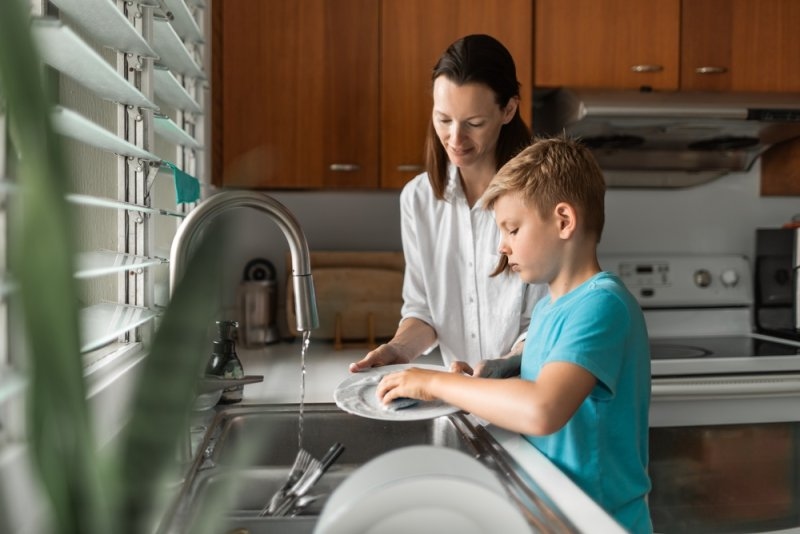
As far as teaching responsibility to kids is concerned, teaching these concepts should start very early and provide consistent support and practice. Assign simple chores for kids early in life, and you will watch kids grow independent and responsible.

Considering that children mature differently, children should approach age guidelines as a base only. Determine the child's maturation level, dexterity, level of focus, and how well he or she follows instructions when selecting responsibilities.
As their ability and stamina for chores are at their lowest, simple chores for kids at this level include putting away games, dirtying clothing in the basket, putting a book on a shelf, wiping up tiny spills, and organizing small lightweight objects.
Housework duties and daily chores for kids under the supervision of parents are more about participation rather than perfection for this age. Ask the child to replicate simple chores for you. This process makes kids' responsibility easier and normalized over time.
This age range may need to have additional simple chores listed on the chore list for kids. Children may tidy the table settings, put games away, separate clean clothing by color, dust surfaces in easy-to-reach areas, stack books, and help prepare food under adult supervision.
With their household and personal chore list expanded, children should get an idea that chores are more than just personal item upkeep. A simple job, putting napkins out on the table, gives them the knowledge that household chores benefit the entire family.
The chore list for kids in this group increases, and they require only a minimal amount of help. Kids might make the bed, fold clothing neatly, clean the floor with a broom, and also help unpack groceries and put away cleaning products and kitchen items. Other tasks include emptying the trash can and plant care.
During this period, it’s essential to establish household standards of tidiness. Demonstrate the chores, provide instruction as to the expected result for each task, and give the child an opportunity to practice.
Chores for children do not mean correcting every minor slip-up. That is one aspect that kids learn and gain knowledge from personal experiences. The household and chore jobs will naturally lead to self-improvement by repetition.
The chore list for kids ages 10-12 can include some complex and detailed chore jobs. Chores can vary, and the simple chores on the list may involve washing clothes, putting dishes away, vacuuming, organizing the bedroom, trash disposal, food preparation, and a portion of the grocery shopping.
When assigning chores to children aged 10 through12 years old, a chore chart for kids is useful to ensure all the daily chores for kids are carried out. Separate individual responsibilities from household chores, and share with kids a number of the new jobs.
With greater independence comes the responsibility for more challenging chore tasks. Teens may have responsibility for daily chores like running the washing machine and dryer, performing all bathroom cleansing tasks, preparing meals for others, doing all the kitchen cleanup and/or pet care. Other housework can include yard maintenance and groceries.
Now, teach them how to stand on their own. For instance, when teaching responsibility to teens, assume they do not know the job unless asked. Allow ample time to do these simple and sometimes tedious jobs. Offer assistance with unfamiliar or unsafe jobs.
At the chore chart for kids’ level, clarity and specifics have a role that is important. Rather than using "clean room," put "Put books on shelf," "put away all toys," or "fill dirty clothes in a basket."
Divide the chore chart for kids into a group of weekly and daily chores and let them be varied. It’s possible to allow an older child to choose household tasks for kids from a given list.
The simple chores that make up daily chores don't need to be long, just consistent. Attach daily household tasks to everyday routines. For instance, household tasks for kids, to put away toys, should happen right before going to bed.
To make day-to-day chores for kids by age less work for everyone, make sure you demonstrate a new job your kids need to accomplish. Show them, offer basic instructions, and slowly leave. When your child starts to grasp the job for kids, then slowly ease up.
Let kids know that although you want housework from them, kids can’t be held to the exact same standards as adults working household tasks.
Explore Further: How to Discipline a Child Effectively Without Yelling or Punishing?
Even when creating a chore list for kids, bad practices exist, so they should be avoided as much as possible.
Simple household responsibilities that enhance a kid's sense of self and independence make the best chores. Listing chores for kids will make him/her self to keep the home tidy while making their useful life skills.
By assigning jobs for kids according to age, setting kid chores schedule, following chore list to track completion will make you very easy task of child work at home much easier. Nevertheless, saying that a child's responsible effort will surely pay off and be well, as a blend of freedom and guidance is assured.
Children can start with simple chores when they're as young as two years old. Suitable starting chores can include putting away toys or placing dirty clothes in a hamper.
Supervision and guidance can help younger kids, and as skills grow, more jobs can be added to the list.
There isn’t a specific answer, though a few consistent jobs may be better than a laundry list of many tasks. Consider a child's age, involvement in school and activities, and readiness to accomplish jobs unsupervised when making these choices.
Keep expectations calm, clear, and consistent for your child, and make the rules clear about how the chore should be done. When possible, a choice between two suitable tasks allows the child a degree of control yet achieves household duties.
Households vary on whether it connects the jobs a child does with an allowance. Basic duties, such as cleaning up toys, may simply be part of contributing to the household, while optionally undertaken tasks may have monetary rewards. Simply ensure that the expectation is clear.
They can be, for sure. Children learn to plan and organize, organize as well as solve problems, as they get the chance to gain proficiency in doing things independently. The job becomes a part of a lifestyle that supports independence at an adult age.
This content was created by AI